
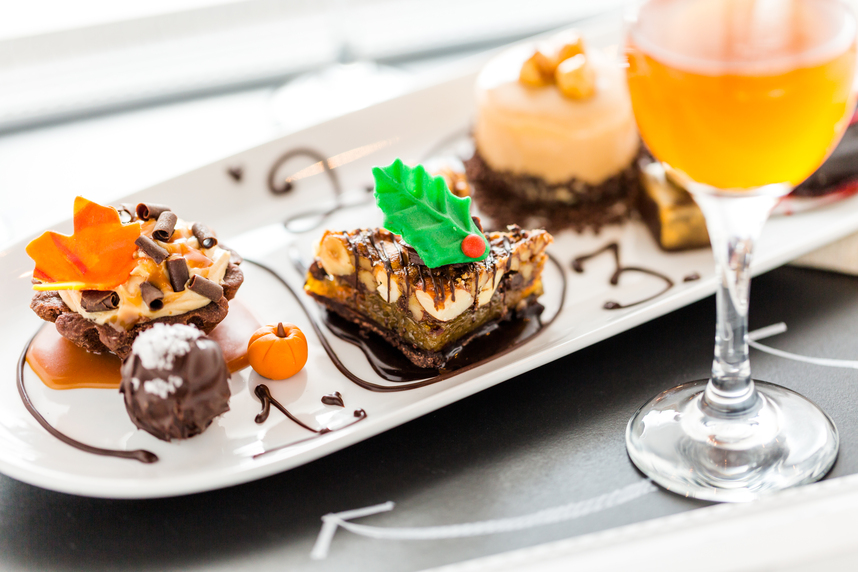
In the world of wine, there is a category capable of winning over even the most discerning palates: sweet wines have the power to surprise and charm with their rich aromas and variety of styles. These are not simply “sugary” wines, as is often imagined, but bottles born from complex, sometimes rare processes, which bring aromas of candied fruit, honey, spices and citrus zest to the glass. In Italy and France, these dessert wines represent a centuries-old tradition, but they can also take centre stage on British tables, paired with classic desserts such as sticky toffee pudding, Bakewell tart or lemon drizzle cake.
This guide takes you on a journey through some of the most interesting and iconic sweet wines and how to pair them with british desserts, perfect for those who want to explore the genre.
What makes sweet wines special and how many types are there?
Not all sweet wines are created equal. Sweet wines are distinguished by the production technique used, which determines their sweetness, aromas and texture. Here are the main types of sweet wines:
- Sweet sparkling wines: naturally sweet and sparkling wines that maintain a lively freshness thanks to the presence of bubbles. A classic example is Moscato d'Asti “Zagara” DOCG 2024, which offers a light and fruity experience.
- Botrytised wines (Noble Rot):wines produced from grapes affected by the Botrytis cinerea fungus. This fungus causes the grapes to shrivel, concentrating the sugars and creating complex aromas of honey and ripe fruit. Although the best-known examples of botrytised wines come from France – such as the legendary Sauternes – Italy has also produced high-quality botrytised wines over the years.
- Ice Wine: produced from grapes that remain on the vine during winter and are harvested when naturally frozen. This process creates a highly concentrated wine. One example is Black Knight Sylvaner IceWine from Germany.
- Late Harvest(Passito / Raisin Wines): the grapes are left on the vine until they reach a high level of ripeness, or they are dried after harvesting, thus concentrating the sugars. Typical examples of this category are Italian passito wines, such as Vin Santo and Passito di Pantelleria.
- Fortified: sweet wines to which alcohol (such as brandy) is added to stop fermentation and preserve sweetness. This process increases the alcohol content and preserves the natural sugars of the grapes. Examples include Port, Sherry and Marsala.
Understanding these differences helps you navigate the many nuances of dessert wines and choose the perfect pairing.

Italy's passito wines: concentration, warmth and depth
Italian passito wines are one of the most fascinating expressions of sweet wines. Here, time is an essential ingredient: the grapes are dried, concentrated and transformed into true extracts of the territory.
Among the most famous bottles is Vin Santo del Chianti Classico, from Tuscany. On Svinando you can find some sought-after versions, we find for instance the Vinsanto del Chianti DOC Castelgreve 2015, or other interpretations such as "Le Masse di Greve" Vin Santo del Chianti Classico Occhio di Pernice 2010.
These are wines that speak of walnuts, dates, caramel and sweet spices, ideal with a Sticky Toffee Pudding or Gingerbread Cake.
Those who prefer a more northern and refined expression will find Torcolato Breganze DOC to be one of Italy's great passito wines, from Veneto. Its balanced sweetness, supported by an unexpected freshness, makes it perfect with apple crumble or custard tart.
Veneto is also home to two other sweet wines that are always worth mentioning: Recioto wines.
Recioto della Valpolicella is the more intense and generous version, with notes of cherries preserved in alcohol, cocoa and spices, making it ideal with rich desserts such as sticky toffee pudding or chocolate fudge cake.
Recioto di Soave, brighter and more floral, plays on honey, yellow fruit and almond, proving impeccable alongside fruit-based desserts — from Apple Crumble to Bakewell Tart.
Two perfect examples of how Italy knows how to express sweetness in very different styles, always maintaining its own unique depth.
On the Mediterranean front, few sweet wines have the reputation of Passito di Pantelleria, with iconic labels such as "Ben Ryé" Passito di Pantelleria DOC 2023
which offers apricot, almond, fig and a unique marine flavour in the glass. It is a wine that serenely supports rich desserts such as Millionaire's Shortbread, but also expresses itself magnificently on its own.
Sauternes and surroundings: the elegance of noble rot and French and Italian sweet wines
When it comes to dessert wines, the mind wanders to the misty vineyards of south-western France, where noble rot transforms grapes into liquid gold. Sauternes wines are among the most celebrated sweet wines in the world, famous for their perfect balance of sweetness, acidity and aromatic complexity.
Among the Sauternes wines, labels such as , elegant and fruity, or the more classic Esquisse de Nairac 2016, rich in honey, apricot and spices, stand out. And for those who want to explore a similar but different territory, Barsac and Monbazillac offer equally fascinating and refined interpretations.
Italy also boasts excellent examples of botrytised wines, such as Arèle's Vino Santo Trentino DOC 2005, which offers a rich complexity of dried fruit and spices, and Romagna Albana DOCG 2023 “Arlus”, another Italian example that perfectly expresses the concentrated sweetness and typical aromas of this style. These wines, with their intensity and complexity, can compete with the great Sauternes, bringing the same elegance and depth, but with an all-Italian personality.
Pairing? Botrytised wines are extraordinary with cream-based desserts – Bread and Butter Pudding, Custard Tart, Lemon Posset – and with blue cheeses such as Stilton, a timeless classic of French-British pairing.
The light elegance of Moscato
Among sweet aromatic wines, Moscato is perhaps the most immediate and beloved. Its notes of peach, sage and white flowers make it an ideal choice for those who prefer measured intensity and a sweetness that is never cloying.
Moscato d'Asti DOCG 2024 represents this style in its freshest and most brilliant version: a light sparkle, an agile sip, the sensation of a wine that accompanies - without overpowering - delicate desserts such as Victoria Sponge Cake or Lemon Tart.
For those looking for something more aromatic and rare, a Moscato Rosa from South Tyrol, such as “Rosis” Moscato Rosa Alto Adige or “Pasithea Rosa” Moscato Rosa Alto Adige DOC 2022, offers more intense tones of petals, red fruits and sweet spices: perfect with a Raspberry Bakewell or a Chocolate Fudge Cake.
Alpine aromas and collectible rarities
In addition to the best-known names, there are some bottles that deserve attention for their uniqueness. Gewürztraminer passito, such as “Pasithea Oro”, is a wine with an intense aroma: rose, lychee, oriental spices. Perfect for those looking for a pairing with chocolate desserts or a spiced carrot cake.
Rare and precious, Picolit del Friuli is one of the most aristocratic versions of Italian sweet wine: absolute elegance, balanced sweetness, and delicate aromas of honey and dried flowers. It is a contemplative wine, ideal with delicate desserts or simply to be enjoyed on its own, as a moment of pure meditation.
How to choose the right sweet wine
There is no such thing as the ‘best’ sweet wine: there is only the right wine for the dessert and the moment.
However, some guidelines can help:
- a wine that is sweeter than the dessert avoids metallic contrasts;
- Muscat wines enhance fresh, citrus-based desserts;
- Italian passito wines pair well with rich cakes, cooked fruit and caramel;
- Sauternes wines excel with creams, custards and blue cheeses;
- aromatic wines, such as Gewürztraminer passito, are perfect with chocolate.
In the glass, sweet wines are not all the same: they vary in structure, aroma, terroir and history. But they have one thing in common: the ability to make a moment special.
This guide offers a rich and accessible journey, ideal for discovering – or rediscovering – the art of food pairing with British desserts together with Svinando. An invitation to explore, taste and be surprised, one glass at a time.