
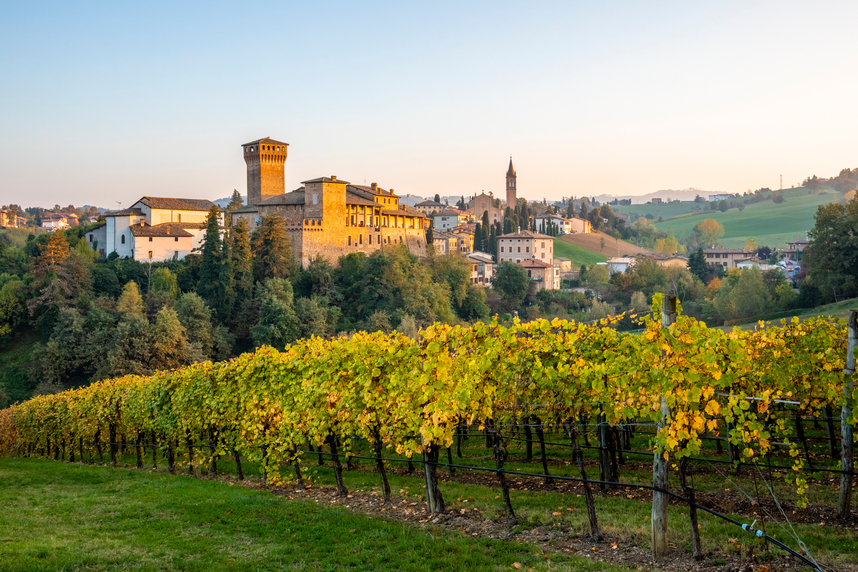
Emilia-Romagna welcomes visitors with genuine dishes and vibrant wines. The carefree nature of the latter (as well as the high productivity of the flagship grape variety, Lambrusco) has led the oenological sector to consider the region as the homeland of low-cost wines, but in recent decades it has been able to count on the work of its most passionate winemakers, who have enhanced the terroir and the pursuit of quality.
To ensure you don't miss out on the wonders of this extraordinary land, here's a complete guide to the wines of Emilia-Romagna!
The region with two faces: terroir, production zones and grape varieties
Everything begins with a watercourse, that of the River Sillaro, which geographically (and one could say culturally and historically too) divides Emilia from Romagna, two areas characterised by distinctly different identities.
This line of demarcation is obviously also found in oenology. Whilst the Emilian area (homeland of Lambrusco wine) showcases carefree and jovial products, in the Romagnan area (known for Sangiovese di Romagna) the focus is on more elegant, structured winemaking suited to ageing. The union between these two souls has allowed Emilia-Romagna to offer extraordinary variety, becoming one of Italy's most productive wine regions.
The nuances are noticed not only in these two macro-areas, but also among the various wine zones, among which the most important are:
- Colli Piacentini: a hilly area characterised by clayey, sandy and marly soils, hot summers rich in humidity, and harsh winters. The most used grape varieties are Barbera, Bonarda, Gutturnio among the reds and Ortrugo dei Colli Piacentini for the whites.
- Colli Bolognesi: composed mainly of clay, limestone and sandstone, the area offers a dry, sunny and well-ventilated climate. Among the most common grape varieties, Pignoletto, Sangiovese, Chardonnay, Barbera and Cabernet Sauvignon stand out.
- Modenese: here too the climate develops between hot, dry summers and cold winters, with fresh breezes coming from the sea. The alluvial soils are rich in limestone, gypsum and rock, excellent for developing the mineral and vibrant aromas of wines. Lambrusco is the most cultivated grape, in the Salamino, Sorbara and Grasparossa varieties. Other very widespread grape varieties are the red Ancellotta, Malbo Gentile and Fortana and the white Pignoletto and Montuni.
- Reggiano: here summers give the vines high temperatures, whilst winters are cold, but not too harsh. The soil is composed of clay, silt and limestone with good drainage capacity. The area hosts important grape varieties, such as many varieties of Lambrusco, Ancellotta, Malbo Gentile, Sangiovese, Merlot, Cabernet Sauvignon and Fogarina.
- Bosco Eliceo: proximity to the sea gives wines saline characteristics, whilst the climate takes on Mediterranean features, with hot but not excessive summers, mild winters and good ventilation. The soils are sandy. Here the Fortana, Merlot and Sauvignon Blanc varieties are mainly cultivated.
- Romagna: presents clayey and calcareous soils, responsible for the mineral aromas of wines, whilst the climate is halfway between Mediterranean and continental, with moderately hot summers, tempered by ventilation from the sea. The protagonist of the area is Sangiovese, together with Albana and Trebbiano
- Colli di Rimini: characterised by a semi-continental climate and alluvial, clayey and sandy Among the most widespread grape varieties, Sangiovese, Trebbiano Romagnolo and Cabernet Sauvignon stand out.
The most iconic reds of Emilia-Romagna
Lambrusco on one side, Sangiovese on the other: Emilia-Romagna is the homeland of fruity and vibrant, fresh and acidic reds, but also of enchanting and spiced ones with a Mediterranean identity. No confusion though, with Svinando it's possible to experience all these expressions!
"Lambrusco del Fondatore" di Sorbara DOC 2024
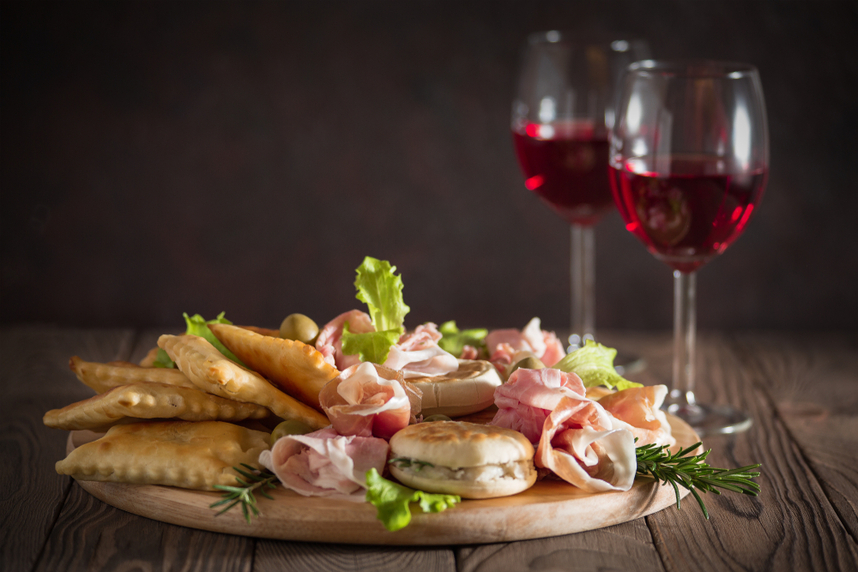
Lambrusco wine is an essential stop for anyone wanting to explore the food and wine culture of Emilia-Romagna, of which it reflects the most vibrant and convivial side.
Widespread in the Po Valley area, the ancestor of the grape variety was celebrated by Latin authors with the name vitis labrusca (wild vine), but its fame reached its peak when it was involved in the sparkling wine production processes in vogue in the 19th century. Today it's the most famous sparkling red wine in the world, known precisely for its drinkable nature.
A perfect example is this bottle of "Lambrusco del Fondatore" di Sorbara DOC 2024, which brings the authenticity of traditional sparkling wine processes to the glass. For its vinification, in fact, the Traditional Method is chosen, bottle refermentation, which is reflected in the quality of the product and the charm of its aromatic profile.
Among its most enchanting aromas stand out cherry, sour cherry, violet, lavender, citrus and particular aromas of fennel and white pepper seeds.
The perlage is lively and refined, and welcomes the palate with an unforgettable freshness, perfect for accompanying the most flavourful dishes, from fried appetisers - which it cuts through precisely thanks to its effervescence - to platters of mixed cured meats. You can also try it with Japanese gyoza or meat tarts.
"Centurione" Romagna DOC Sangiovese Superiore 2023
Typical of Tuscany, where it's vinified to produce the iconic Chianti, Sangiovese has also taken root in the Romagna area (as well as between Marche, Umbria and Lazio), with excellent expressions and its own identity. The origins of the grape variety - the name perhaps derives from Sanguis Jovis - are still shrouded in mystery, although it's thought to have been widespread among the Etruscan populations.
You can experience this excellent grape variety by uncorking a bottle of "Centurione" Romagna DOC Sangiovese Superiore 2023, the result of careful work both in the vineyard and in the cellar. The 6 months of ageing and further rest in bottle mature the wine's aromas, which express themselves through a bouquet of morello cherry and violet.
The taste is satisfying, dry and full, just what's needed to accompany meat menus, whether rich English breakfasts, Sunday roasts, sausages with beans, pies or steaks.
"Gutturnio" Frizzante Colli Piacentini DOC 2022
A land of great native varieties, Emilia-Romagna knows its stuff when it comes to creating unforgettable blends, as in the case of Gutturnio, obtained from the vinification of Barbera and Bonarda, probably already by the Romans, who called the silver cup used during banquets Gutturnium.
Fruity, fresh and slightly acidic the first, soft and full-bodied the second, the combination of the two grapes (vinified separately) gives life, in this "Gutturnio" Frizzante Colli Piacentini DOC 2022, to a lively and sociable wine.
The ruby red colour recalls forest fruits, which also represent its organoleptic identity. The bouquet ranges from raspberry aromas to blueberry ones, which also return on the palate. The pleasant effervescence immediately invites a second sip, enriching meat dishes such as mixed cured meats, roast beef, beef wellington and sausage rolls.
The best white wines of Emilia-Romagna
The same organoleptic variety is recorded in the whites of Emilia-Romagna, which range from the freshest and lightest proposals to the most structured and full-bodied labels.
There's no palate that cannot be satisfied by tasting these wines, as evidenced by the proposals selected by Svinando!
"Arlus" Romagna Albana DOCG 2023
Famous above all for its reds, Emilia-Romagna knows its stuff when it comes to white wine production too, as demonstrated by this excellent "Arlus" Romagna Albana DOCG 2023.
Celebrated in the writings of Pliny the Elder and Cato, it's thought that the grape variety spread to the Rubicon area thanks to the Romans, who called it so because of the pale colour of its berries.
This Albana is obtained from grapes that ripen at different times. Whilst part of the bunches is harvested, another is left on the plant, so that botrytis cinerea attacks the berries, amplifying their organoleptic notes. The process is reflected in the organoleptic identity, which plays with the enchanting floral aromas of wisteria and jasmine, then accompanying them with notes of peach and apricot.
On the palate it's harmonious and enchanting, excellent during aperitifs, together with various types of finger food, fried foods, meat or fish balls, chicken skewers, prawn salads or salmon canapés, but also with fish courses, from traditional Fisherman's Pie, to seafood soups, from grilled sardines to smoked fish recipes.
Malvasia Colli Piacentini DOC "Sorriso del Cielo" 2023
There are those who demand freshness, minerality and lightness from a white wine, and those who don't want to give up a full-bodied tasting with pronounced aromaticity. Malvasia di Candia Aromatica responds excellently to the needs of the latter, enriching the food and wine culture of Emilia-Romagna with an enchanting herbaceous and tropical organoleptic charge.
Widespread above all in the Colli Piacentini area, where it has found the perfect terroir to best express its aromas, the grape variety became popular in the Middle Ages, when wines from nearby islands, particularly Crete (called Candia at the time), converged in the Greek village of Monemvasia (later corrupted to Malvasia), then becoming the protagonists of the Republic of Venice's commercial exchanges in the Mediterranean.
Malvasia Colli Piacentini DOC "Sorriso del Cielo" 2023 is characterised by an aromatic charge that doesn't leave one indifferent. In the glass the first thing that catches the eye is the elegance of its golden hues, but equally enchanting is the olfactory examination, characterised by aromas of yellow fruit, tropical fruits, aromatic herbs and white flowers. The tasting envelops the palate with a soft and pleasantly savoury taste, to be appreciated during aperitifs with mixed cheeses and flavourful cured meats. Add an afternoon of chatting with friends, and the experience becomes magical!
"Curena" Pignoletto Frizzante DOC 2024
Those who appreciate the jovial and genuine soul of Emilia-Romagna cannot fail to conclude the tasting with a glass of Pignoletto, a wine produced with an ancient grape variety, which probably has its origins in Roman times, as suggested by the mention by Pliny the Elder. It's said that he named it Pino Lieto, because of its slightly bitter aftertaste, whilst another theory attributes the name to the resemblance between the bunch and the shape of a pine cone.
Light and drinkable, fresh and fragrant, just one sip of "Curena" Pignoletto Frizzante DOC 2024 is enough to forget any bad mood. Thanks to its lively effervescence, which amplifies the aromas in the glass. These highlight the aromas of wisteria and almond, followed by a refreshing sip.
The best pairing with this wine from Emilia-Romagna? Land or sea aperitifs, cured meats, cheeses, savoury tarts, salmon sandwiches or with chicken salad, chicken wings, fried foods, vegetable samosas and cheddar bites.
Between tradition and innovation: history of Emilia-Romagna wines
The winemaking tradition in Emilia-Romagna has deep roots, dating back - as historical finds testify - to the Villanovan civilisation, present in the area in the 2nd millennium BC. The foundations of viticulture were subsequently developed by the Etruscans, but even more so by the Romans, who improved winemaking techniques and expanded the repertoire of grape varieties, including vitis labrusca, the probable ancestor of Lambrusco.
After a period of stagnation following the fall of the Roman Empire and after the economic crisis that crossed the 17th and 18th centuries, the space available for viticulture was considerably reduced, but in the 20th century the first cooperatives were born that started large-scale wine production, replaced only in the 1990s by the activity of small traders, who devoted greater attention to detail and achieving high quality standards.
The charm and authenticity of Emilia-Romagna in a glass? With Svinando it's possible! Explore the catalogue and choose the Emilian or Romagnan labels that fascinate you most!