
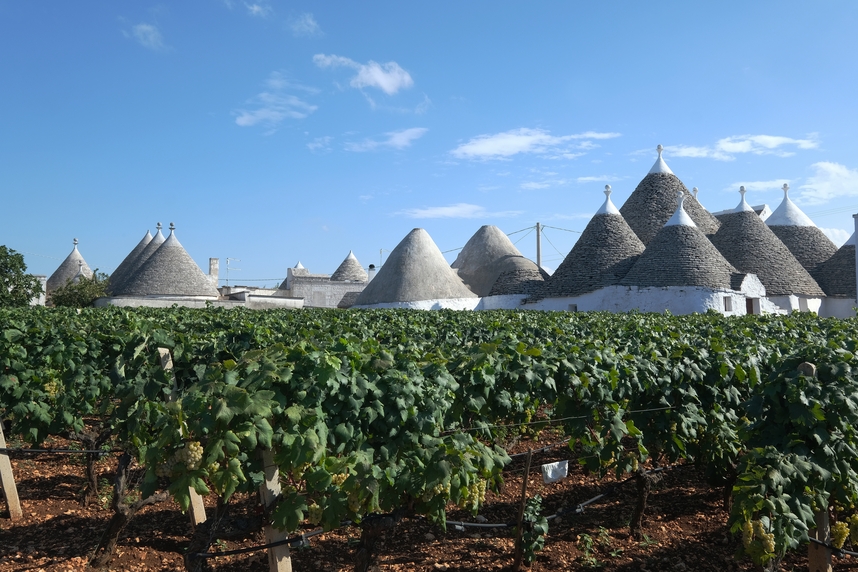
With its long, narrow surface, lapped by the waves of two seas, Apulia is one of Italy's most recognisable regions, and this is also true from an oenological perspective. For over 2,000 years, human hands have worked tirelessly to achieve the quality that the region prides itself on, but much of the credit goes to the terroir, which gives the vineyards a varied morphology, a mild climate and calcareous soils rich in minerals.
Here's a guide to Apulian wines, from the most widespread grape varieties to the most delicious pairings!
Apulia's red wines
Apulia's diversified terroir has the merit of offering the market varied production capable of satisfying everyone's palate. Red wines represent the most substantial portion of all oenological activity, ranging from the most robust, tannic specimens with spicy profiles to those that are soft, light and pleasantly acidic.
Here are some labels to help you navigate the best Apulian red wines!
"San Gaetano" Primitivo di Manduria DOC 2022
A protagonist of regional oenology - probably brought to Southern Italy by the Greeks - Primitivo owes its name to the early ripening of its fruits, and is an unmissable wine for those who wish to discover Apulia's softer and fruitier side.
A worthy representative is this "San Gaetano" Primitivo di Manduria DOC 2022, which previews its aromatic depth through an intense ruby red colour with violet reflections. The tasting offers one surprise after another, starting from the warm aromas of blackberry and violet, through to the light taste, moderately tannic and acidic towards the finish, with a hint of wild berries that immediately invites a second sip.
A wine like this, decisive and genuine, pairs beautifully with intensely flavoured recipes, such as a platter of mature cheeses or a red meat menu, including roasts, beef fillets, steaks, stews, game-based preparations or hearty dishes with full-bodied sauces.
"Teresa Manara" Negroamaro Salice Salentino DOC Riserva 2021
As with Primitivo, Negroamaro is also thought to date back to Greek colonisation of Southern Italy. Adaptable and quite productive, this grape variety creates labels with fruity scents and deep nuances reminiscent of tobacco, as in the case of this bottle of "Teresa Manara" Negroamaro Salice Salentino DOC Riserva 2021.
An excellent companion for red meat barbecues, venison or hare stews, or with a slice of Cottage Pie or Beef Wellington (but also with long-aged cheeses), this Negroamaro is a treat for the senses, a wine with an intense ruby red colour and complex aromas of blackcurrant, violet, mastic, undergrowth, Mediterranean scrubland and spices. Its decisive and leathery character is expressed particularly on the palate, thanks to a powerful yet elegant taste, ideal for ageing!
Apulia in pink: discovering regional rosés
If there's a land that best represents the soul of rosé wines, it's Apulia. It's here that Italy's first rosé was born - the Five Roses from the Leon de Castris winery - and it's still here that unmissable labels are produced, thanks to red grape varieties with good structure, but also refreshing, fruity and immediate characteristics, suitable for this type of vinification. Here are some ideas for exploring the best rosé wines in Apulia!
"Augustale" Castel del Monte DOCG Bombino Nero Rosato 2024
Famous for its natural wonders, Apulia is also a land of great historical and cultural interest, as evidenced by Castel del Monte, the famous octagonal building commissioned by Frederick II of Swabia in the 13th century. The monument lends its name to the label "Augustale" Castel del Monte DOCG Bombino Nero Rosato 2024, which from the heart of the Murgia reaches the table to enhance a great variety of dishes, from rustic appetisers like focaccia, small pizzas and savoury tarts, to legume soups, right through to octopus and potato salads, crab cakes and baked fish.
Versatility, however, is not its only strong point: this wine captures the eye with an enchanting cherry pink colour, then continues its conquest thanks to a bouquet that blends wild strawberries, cherry, pomegranate and geranium, all enlivened by an evident mineral note. On the palate it's profound yet light, pleasantly fresh and savoury.
"Zìnzula" Negroamaro Rosato Salento IGT 2024
An excellent grape variety for red production, Negroamaro also represents a perfect base for rosés, as this "Zìnzula" Negroamaro Rosato Salento IGT 2024 demonstrates. Freshness and savouriness are its strong points, perceptible both on the nose and on the palate.
The first impact plays entirely on floral, fruity and spicy notes, amongst scents of dog rose and sour cherry, with an appealing counterpoint of ginger, pink pepper and turmeric. In the mouth it expresses its freshness through good savouriness and an acidic note that closes the sip.
Among the best pairings with Apulian wines of this type, vegetarian cuisine and raw seafood dishes stand out. Try it with salmon or tuna tartare, or on a picnic with vegetable quiches, green bean salads, couscous, courgette flans or veggie sandwiches!
The best Apulian white wines: characteristics and pairings
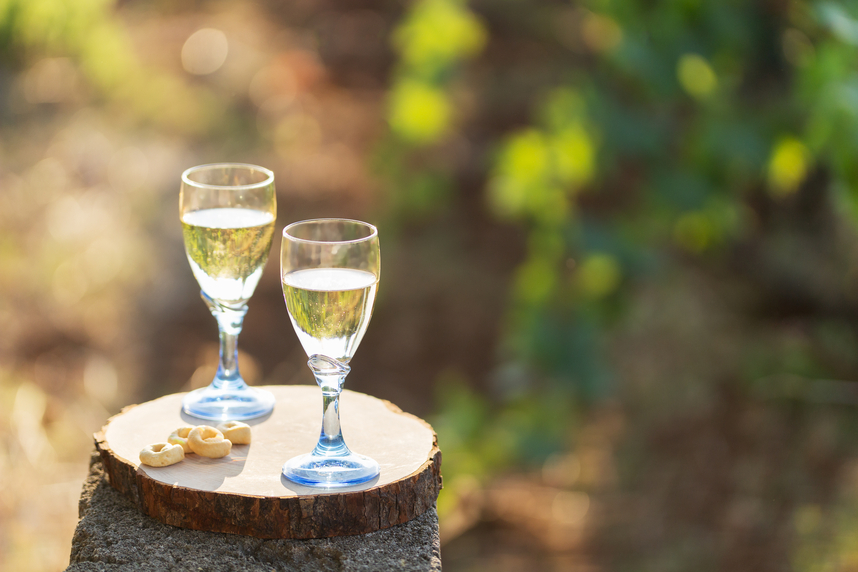
Despite the predominant production of reds and rosés, Apulia's climatic and geological conditions also play a central role in creating white wines with complex aromas and mineral profiles. This is why you cannot truly know the region without thoroughly exploring this heritage too!
Verdeca Valle d'Itria IGT 2024
The brilliant green colour of its bunches seems to anticipate the organoleptic vivacity of this grape variety of Greek origins, one of the most important white grape varieties in Apulia. In a glass of Verdeca Valle d'Itria IGT 2024 you can find precisely this: an innate freshness, a cheeky bouquet and a carefree sip that lends itself well to evenings of wine and conversation, or a delicate tasting of sushi and sashimi.
Characterised by a beautiful straw yellow colour with green reflections, this wine expresses itself on the nose with notes of aromatic herbs, white flowers and honey, while on the palate it's harmonious and slightly acidic, with a savoury taste that persists at length.
"Terre del Crifo" Castel del Monte DOP Bombino Bianco 2023
This survey of pairings between food and Apulian wine concludes with a label produced with the Bombino Bianco variety, used here in its pure form. Widespread particularly in the Foggia area, it's said that the grape variety was brought to Italy by the Templars, directly from the Holy Land, while the etymology of the name remains uncertain. Some think it's called this because of the resemblance of its bunches to the image of a child stretching out their arms, whilst others claim it derives from Spanish terms meaning "good wine".
Among all these doubts, there's one certainty: bombino is the ideal wine for those seeking freshness and vivacity, but also a savoury and distinctive finish.
The "Terre del Crifo" Castel del Monte DOP Bombino Bianco 2023, characterised by an elegant, luminous straw yellow colour, conquers the senses with an organoleptic profile of white flowers, crisp fruit and aromatic herbs. The sip is equally carefree, refreshing and balanced, with citrus notes and a balsamic aftertaste that doesn't leave you indifferent. Excellent to uncork with fish baked or pan-fried and seasoned with simple Mediterranean herbs. Not bad either with seafood, swordfish carpaccio and classic aperitif finger foods!
The origins of wine in Apulia: an ancient art with varying fortune
The history of wine in Apulia owes much to the Phoenicians, Greeks and Romans, who in Italy enhanced and improved the rudimentary cultivations begun by local populations. The Romans, in particular, made Apulian wine - celebrated by Pliny the Elder and Columella - the protagonist of commercial exchanges, whilst medieval monasteries were fundamental for continuing wine-making activity, though it was confined to local and daily consumption.
Between the 19th and 20th centuries, Apulia became a reference point for massive wine production, to the detriment of label quality. When Northern Italy was devastated by phylloxera, it indeed requested large quantities of Apulian wine to blend with northern wines and give them colour, structure and character.
But around the 1980s, the varieties cultivated for this purpose were enhanced and vinified in their pure form, and thus - from simple blending wines or table wines - Primitivo, Negroamaro and Nero di Troia became elegant and complex products, worthy of representing Apulia on the international oenological scene.
Terroir, wine zones and grape varieties of Apulia
Viticulture in Apulia has changed greatly in recent decades, primarily in its intentions. If once efforts were concentrated on quantity, today new generations of producers have understood that they have a climatic and geological treasure in their hands to enhance in favour of quality oenology.
Squeezed between the Adriatic Sea and the Ionian Sea, Apulia owes its rich wine heritage to the varied morphology of the territory, which alternates coasts, hills and plains. The Mediterranean climate is characterised by hot, dry summers, mild winters and good thermal variation between day and night, which - combined with sea breezes and predominantly calcareous soils (with additions, depending on the area, of clay and sand) - favour gradual ripening and the development of rich aromas and mineral nuances.
Among the region's numerous production areas, the best known are:
- Salento: home to countless DOCs, this zone in the southernmost tip of the region (between the provinces of Brindisi, Lecce and Taranto) is known above all for producing excellent red and rosé wines with character, although quality whites are not lacking. The calcareous and clayey soils, good sun exposure and good ventilation impart spicy and robust notes to the wines, produced mainly with Negroamaro, Primitivo, Malvasia Nera and Susumaniello grapes. Among the whites, Malvasia Bianca, Verdeca and Fiano stand out.
- Valle d'Itria: south of Bari, presents a different climate compared to most of Apulia, with cold winters and breezy summers. Geologically, it's known for its red earth, composed of limestone and clay, ideal for cultivating white grape varieties with good acidity and complex aromas. Here, Bianco d'Alessano and Verdeca dominate, as well as lesser-known Apulian grape varieties like Francavidda and Impigno.
- Murgia: known for the eponymous plateau, this extensive zone features rocky and calcareous soils with excellent drainage capacity, which give wines interesting mineral Humidity is kept at bay by abundant ventilation, which reduces the risk of parasites and diseases. Viticulture focuses on working with Nero di Troia, Primitivo, Bombino Nero, Aglianico, Greco, Malvasia Bianca and Pampanuto.
- Daunia: situated in northern Apulia and bounded by the Gargano massif, presents soils rich in limestone, clay and sand with excellent drainage capacity, ideal for white grape These include Bombino Bianco and Malvasia Bianca, whilst among the reds you can find Aglianico and Nero di Troia.
Now that Apulia holds no more secrets for you, don't miss the best labels on Svinando. Discover this magnificent region by exploring the catalogue!